Freedom To Try
My experiences starting a business in Northern Ireland

My hometown of Camlough is a microcosm of Ireland itself. It captures both the country’s anti-establishment spirit and its seemingly contradictory faith in big government. My own experiences: growing up in a strongly republican community, working abroad in the US, and eventually opening a coffee shop have made me deeply aware of this tension. What I learned along the way is that faith in state intervention to deliver results is often misplaced, and that the North of Ireland could benefit from a stronger current of libertarian thinking.
On a trip home in December 2022, I was driving through Camlough, a small village of about 2,000 people in the North of Ireland. As I approached the center of the village, I noticed from the corner of my eye that a bookmakers, which had been part of the furniture for decades, had shut up shop. I’d always associated establishments like these with lower income areas. To me, they symbolized slow progress and seemed at odds with the interests of a growing, well-educated community. I felt a brief sense of optimism, until I realized the business had simply moved across the street into a less appealing building.
Don’t get me wrong, our village has come a long way, with new shops and restaurants adding to its charm. And in the spirit of Irishness, I wouldn’t want to see the pub culture disappear. Still, I think optionality matters. When the bookmakers moved, it left behind a beautiful building with large front-facing windows. That vacancy fit perfectly with my long-held entrepreneurial itch to open a coffee shop. I was well aware that a coffee shop wouldn’t be highly lucrative (a well-run coffee shop nets 15% profit per year on its revenue, which isn’t much). Instead, my goal was to give people in my area more options, to create a place I wish had existed when I was a teenager. Somewhere you could go to discuss ideas and have a laugh without drinking.
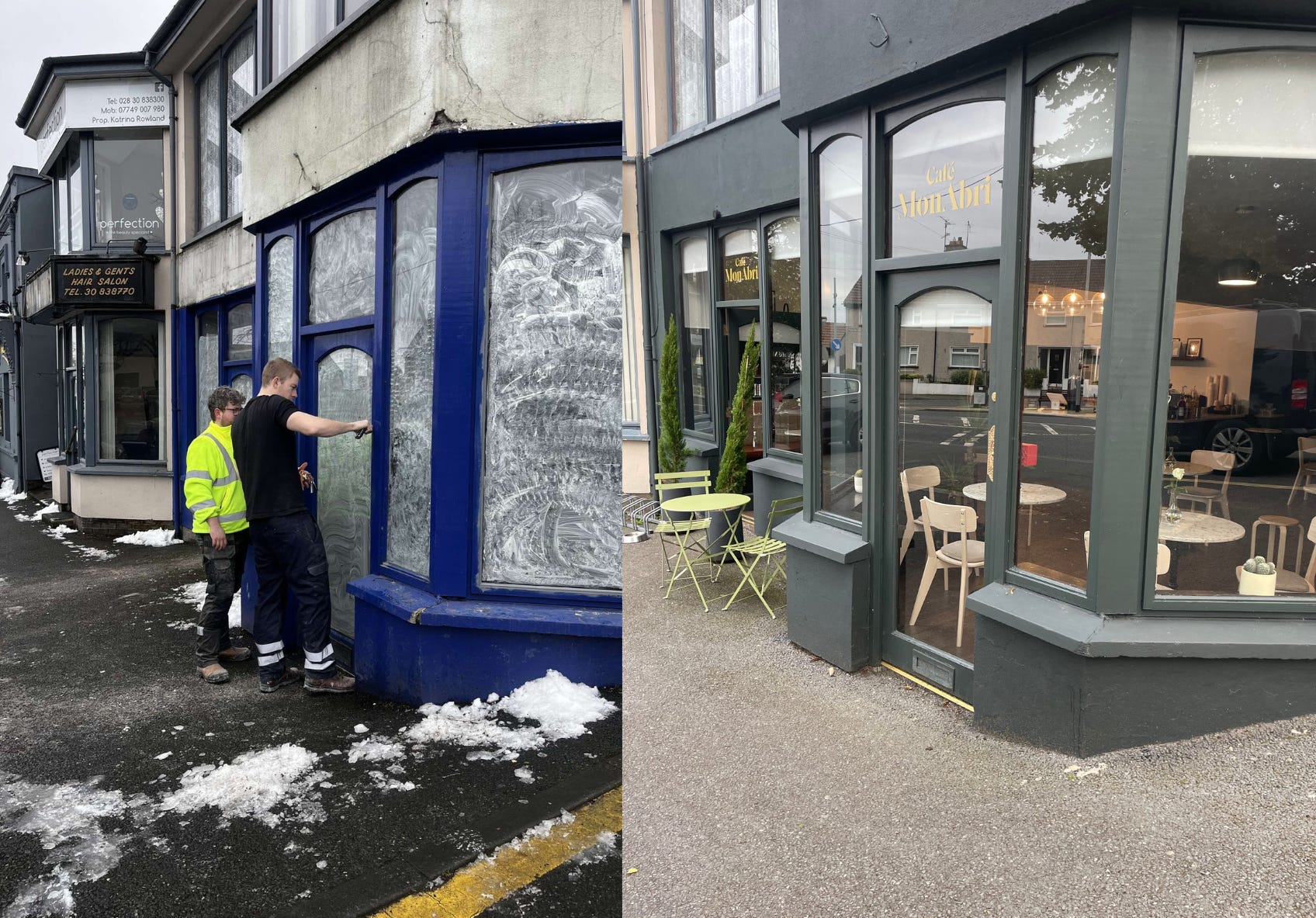
For an area that covers less than a square mile, our village had seven pubs, one bookmakers, and seven hairdressers at its peak. If you’re ever looking for a place that fits neatly into your Irish stereotype, look no further. Though, admittedly, the hairdresser ratio still baffles me.
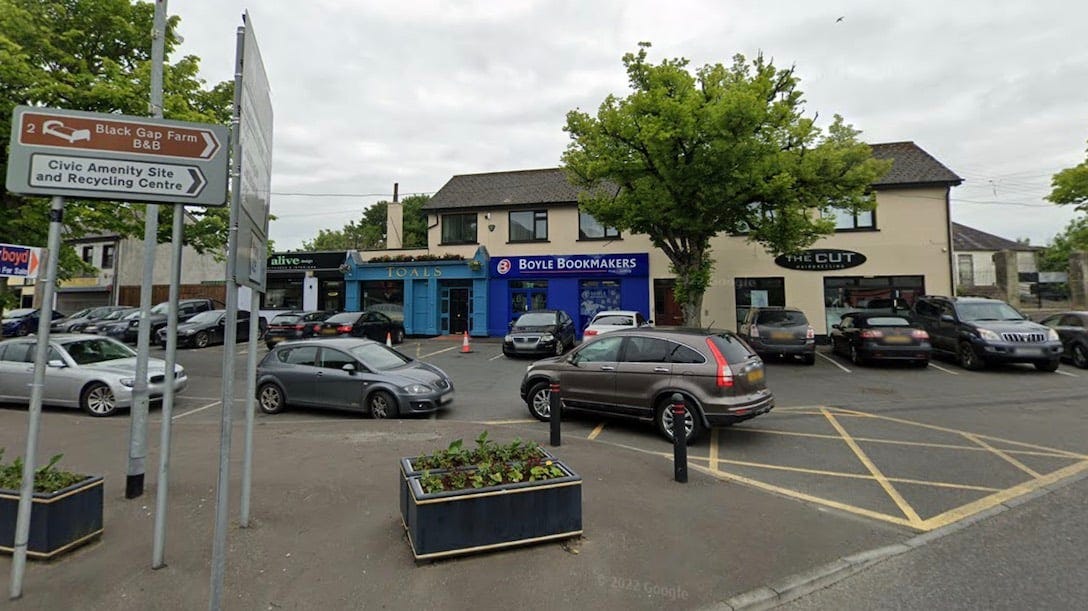
The next day, I called the building’s landlord and set in motion a project that would teach me a lot about opening a small business in the UK and how the government makes it deeply unattractive for a motivated entrepreneur to thrive. When you look at the history of this area, it’s not surprising we ended up this way.
Though Camlough sits on the island of Ireland, it is technically part of the United Kingdom. We use Great British Pounds, not Euros. Our road signs are in miles, not kilometers. And unlike other parts of the UK, many here refuse to swear allegiance to the British monarch. In that sense, anti-establishment sentiment runs through the village’s veins.
There are strong parallels between the Irish struggle for independence and the American Revolution, but while the American Revolution leaned libertarian, Irish independence veered socialist. The most likely reason for this is that the Americans achieved a decisive military victory over Britain, while Irish revolutionaries were compelled to settle politically, most notably through the Anglo-Irish Treaty of 1921. That’s why someone like James Connolly (1868–1916), a Marxist thinker, struck a chord. By the early 1900s, farmers had gained ownership of their land (see Irish National Land League), but city workers were still trapped in poverty, creating fertile ground for socialist ideas.
These socialist ideas exist to this day and are championed by Sinn Féin — a party that has held a majority vote in Camlough for over twenty years. Also, true to their republican principles, Sinn Féin practices abstentionism, meaning its MPs do not take their seats in Westminster; mirroring the strong anti-establishment ethos of the people.
Growing up in my area, it was almost unthinkable to vote for anyone other than Sinn Féin. Conversations with friends rarely focused on policy. The question was never: “What are Sinn Féin’s policies?” but, “Do they support a united Ireland?” The two-party system in the North fostered what I saw as tribal voting. Camlough is a single-issue voter base, similar to many unionist areas that vote mainly to preserve their connection with Westminster.
As far back as I can remember, I’ve held libertarian notions. I’ve always had a distaste for government-controlled financial institutions. Access to capital for entrepreneurship felt like a pipe dream. At one point, I was denied a loan from a bank to cover rent as a student, forcing me into the private loan market. The bank never gave me a clear reason for the rejection, and it felt as though no one bothered to understand my earning potential or likelihood of repayment. That experience sparked my foray into the cryptocurrency space, which offered an ideological framework that aligned with my frustrations about the status quo.
For someone in my position, it might seem surprising that I never leaned more socialist. But to be blunt, the idea of expanding a government that has consistently demonstrated incompetence at nearly every level holds little appeal. Socialist politics emphasize what philosophers call positive rights. These are policies framed as “you have the freedom to,” in contrast to the negative rights emphasized by libertarianism: “you have the freedom from.” Anytime a political movement emphasizes “freedom to,” the long-term consequence is usually a larger and more interventionist government. At its core, this philosophy depends on force. Every “freedom to” right, such as healthcare, housing, or education, implies that someone else must provide it — willingly or not. To guarantee these rights, the government must take from some to give to others. If you follow that logic to its conclusion, enforcing positive rights means the state must use coercion against its own citizens. It is a moral paradox: to create freedom for one person, the government must restrict the freedom of another. At this point, a socialist will make the emotional argument of: “so you don’t care about the poor, the sick, or the disabled?”
Of course I do. The difference is in how you help people. I want people to live safe and dignified lives, but forcing others to pay for that isn’t compassionate. Bureaucrats absorb resources that could go directly to the people who need them. Care happens when individuals, families, and communities choose to help, not when they are forced to by the state. You can see it everywhere: a community raising money for a surgery gets results in days, while public systems take months of queues and paperwork. Local charities rebuild homes while the government is still setting up meetings. Markets respond because they have to, and bureaucracies stall because they can. Compassion works best when it’s delivered by people who have skin in the game, not by systems that feel nothing when they fail. Few examples show that lack of accountability better than Stormont, which hasn’t functioned for nearly a third of the last twenty years but still pays its politicians to sit at home.
Socialist policies often sound good on the surface. They appeal to the working class and to those seeking short-term fixes. But in the long run, they act as band-aids, masking fundamentally inefficient systems run by career politicians.
Do I think there’s an appetite for a Libertarian party in Northern Ireland? Possibly. However, given that nearly 1 in 3 people work in the public sector, it’s likely a hard sell. Government reliance is entrenched. This compares with less government involvement in the Republic of Ireland at around 14% and the United States (federal + state and local) at around 15%.
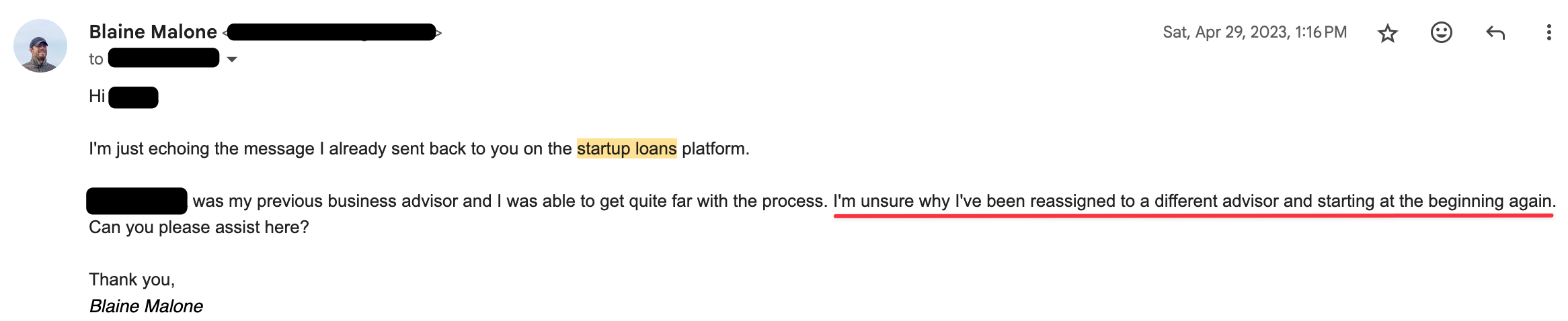
Before opening the coffee shop, I had been living abroad for nearly six years — first in London, then in New York. The capital to open the business in Camlough came from the United States. Access to capital is simply easier outside Northern Ireland. To this day, I do not know how I would have earned enough to become a business owner had I stayed. The UK government and Stormont advertise “schemes” offering grants and loans to small businesses, but I quickly realised most of this was political theatre. I spent countless hours filling out applications and jumping through hoops. At one point, after thinking I was near the end of the process, I was told they had “lost my application” and that I needed to “start again with a new advisor.” I gave up and chalked it up to what I already suspected: government isn’t efficient, it’s probably corrupt, and if you want something done, you do it yourself.

My issues with the government didn’t end there. On a crisp Tuesday morning in December, a few months after opening the coffee shop, one of our baristas heard a knock on the door before we had officially opened for the day. It was a “bin man,” as garbage collectors are affectionately known back home. When she greeted him, he was immediately hostile. He complained that our coffee shop hadn’t given him and his colleagues a “Christmas present” this year. Upset by his tone, she broke down in tears and passed the message on.
The irony wasn’t lost on me. The bin collection service is a government-run monopoly, paid for by taxpayers. We had no choice but to use them, yet here they were, demanding gifts as if we were in their debt. Suffice it to say, it never became a serious issue, but as a business owner, it plants an unsettling seed. The kind that makes you wonder how easily a seemingly innocuous service like this could transform into outright extortion. Contrast that with our phenomenal milk man (yes, we have milk men in Ireland). This small business was privately run, had competition, and went out of its way to make sure we always had the best experience possible. Could my milk supplier have ever pulled a stunt like that? Of course not. We would’ve gone to his competitor a few miles down the road. Competition creates better service because people are accountable when they fear losing business.
Historically, the people of Camlough have had a deep respect for entrepreneurs. Just recently, the village lost one of its most prolific businessmen: Jim Hughes. For over forty years, Jim provided thousands of jobs to local people. Many would say that he and his family single-handedly turned Camlough into a destination for commerce. Without his investment, it might have remained little more than a road lined with pubs and hairdressers. His continued commitment to the village brought not only essential services like a grocery store, pharmacy, and petrol station, but also luxuries such as a restaurant, ample parking (which made my own café a viable destination), and retail space for butchers, barber shops, takeaways, accountants, opticians, and more.
It’s not controversial to say that Jim Hughes has done more for the village of Camlough than any elected official in my lifetime. What I find difficult to reconcile is that our community recognises the impact of businessmen like Jim Hughes, yet continues to support a government whose policies discourage the very spirit he embodied.
Within the first few weeks of opening, as we were still finding our feet, we started getting visits from a private investigator contracted through the government and paid for by our taxes. Their job was to monitor what music we played in the café. On multiple occasions, one of them would come in, sit near our speakers, and open his laptop to record what was playing. He was not covert in the slightest and did not have the courtesy to buy a coffee while using our seating, electricity, and Wi-Fi. You can read more about this government scheme here. For months, we were threatened with fines which, if left unpaid, would have resulted in closure. It cost £50 a month, apparently to protect us from the danger of accidentally playing anything outside our royalty-free playlist — like, heaven forbid, Ed Sheeran.
As if being policed over our playlist wasn’t enough, the tax system added its own layer of absurdity. When you want to sell goods or services in Northern Ireland, you have to apply Value Added Tax (VAT) to your prices once your business earns more than £90,000 a year. Our coffee shop hit that threshold early on, which meant navigating a labyrinth of, let’s be honest, ridiculous rules. For example, takeaway food doesn’t require VAT, but if that same item is heated before purchase, it suddenly does, at 20%. If we sold gingerbread men and decided to add a chocolate smile, we’d have to charge VAT because chocolate covering more than 1% of the surface makes it a “luxury good.”
The idea behind VAT is that businesses “add value” to raw materials, and therefore the government deserves a cut of that value. In theory, you can reclaim the VAT you’ve paid on supplies, so long as you’ve bought enough VAT-inclusive goods and services to offset what you’ve collected. But this only works if everyone in the chain is playing along. I charge VAT, you charge me VAT, and it’s meant to balance out. In practice though, it doesn’t. Smaller businesses earning under £90,000 don’t charge VAT at all, yet some still price their goods as if they did. Others who should charge VAT don’t declare all their income, especially when most of their payments are in cash. The system rewards avoidance and punishes honesty. It’s adversarial by design, not a framework that encourages entrepreneurship.
And VAT is only one piece. After all that effort, say your café earns a modest £20,000 profit. Twenty percent of it goes straight to the government in corporation tax. The same government that’s spent roughly a third of the last twenty years unable to govern itself.
My experience taught me that Northern Ireland has a weak pull for entrepreneurship. The barriers placed in front of small business owners make innovation and growth feel dead on arrival. Entrepreneurs should be incentivised, not punished. That means blanket exemptions or deep relief for new small businesses, at least in their early years. Our first-year property tax bill (colloquially known as “rates”) was ~£5,000. Many local businesses own their buildings, so they skip rent but still face that same bill. Supposedly, it pays for bin collection, roads, and education etc. But aren’t those already funded by income tax, corporation tax, and the countless other levies we face?
These archaic, tangled rules aren’t meant to be understood. Somewhere in a government office, someone is paid to think about how wide the chocolate smile on your gingerbread man is. You have to ask yourself, regardless of your views on taxation, are these systems really the solution? Do they serve us, or are they quietly stifling our ability to build wealth?
At the time of writing, after two and a half years, I sold my share in the café, partly for the reasons above and partly for others. The shop is still alive and well thanks to the hard work of the staff and my family, and the capital injection I brought home from my earnings in the United States. Without that, the café simply would not exist. No government grant, local scheme, or bank loan made it possible. Private capital did. The business now turns over hundreds of thousands of pounds a year, though profitability still depends heavily on good management.
Through Camlough’s modest economy, you can start to see how big government often gets in the way rather than helps. Positive rights resonated with the working class of the early 1900s because they were genuinely struggling and part of the “have nots.” Of course, “freedom to” policies were an easy rallying cry back then.
But Northern Ireland today is a different place. Our standard of living has risen many times over since the early 1900s. Our population is highly educated, and young people are yearning for more opportunity. Like many others, I left Northern Ireland in search of an environment that matched my ambition. At a time when every major party here seems focused on expanding the state, I believe this is fertile ground for a different approach — one built on “freedom from” rather than “freedom to.”
Like our neighbours across the Atlantic, the American focus on negative rights, captured in documents like the Bill of Rights, reflected an optimism about the future. Their belief was simple: if the British government just left them alone, they could figure it out and build something remarkable. Coupled with Enlightenment ideals, they went on to create the largest and most prosperous economy in history.
So the question remains: could Camlough, and the North more broadly, do the same if only given the freedom to try?
For anyone curious where they stand, I’d suggest taking the Nolan Chart quiz. I suspect many would be surprised at how libertarian they lean once the issues are separated from party politics.
Acknowledgments
Thank you to Olivia Barnett who read and left comments on this piece before publishing.